
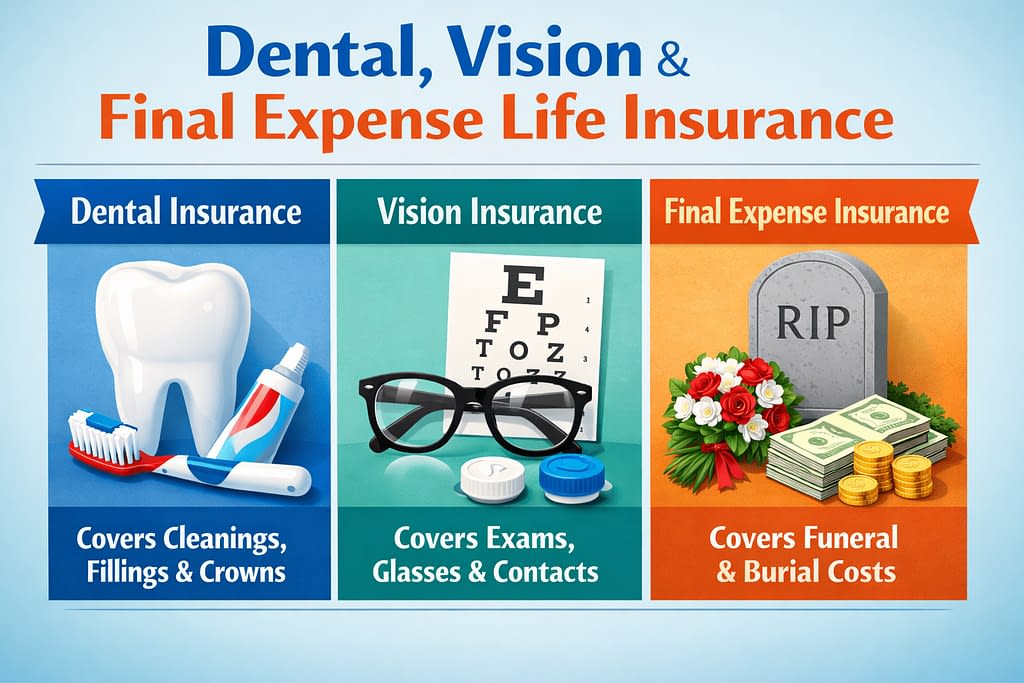
Maintaining good oral health is about more than just a bright smile—it’s also key to your overall well-being. Untreated dental issues can lead to infections, gum disease, and even impact conditions like heart disease and diabetes. Unfortunately, dental care can be expensive without insurance. That’s where individual Final expense life insurance and dental, vision insurance come in.
At O’Neal Insurance Group, we help people and families compare dental insurance plans. These plans offer affordable access to preventive care and cover more extensive treatments. We can help you find a plan that fits your needs. Whether you want a budget-friendly option for basic cleanings or full coverage for major dental work, we’ve got you covered.
Why Is Dental Insurance So Important?
Dental procedures, even routine ones, can add up quickly. A simple exam with X-rays often costs over $100, while a crown, root canal, or bridge can run into the thousands. For families, those costs can multiply quickly. Dental insurance helps offset these expenses and makes it easier to stay on top of your oral health.
Here’s why having coverage matters:
- Covers preventive care: Most dental insurance plans cover routine cleanings, exams, and X-rays at little or no out-of-pocket cost. Regular checkups catch small problems—like cavities or gum inflammation—before they become serious (and costly) procedures.
- Reduces treatment costs: Need a filling, crown, or dentures? Insurance helps pay a significant portion of these expenses, reducing financial stress when unexpected dental issues arise.
- Encourages regular visits: People with dental insurance are more likely to see their dentist twice a year, helping prevent expensive, painful problems that result from neglecting oral care.
- Helps manage major expenses: For more involved procedures, like root canals or oral surgery, a good plan can save you hundreds—or even thousands—of dollars.
Without coverage, many people put off or skip care. This often leads to worse and more costly dental problems later.
What Do Dental Insurance Plans Cover?
Dental insurance plans are designed to help reduce out-of-pocket dental care costs. While every plan has its own rules, most policies group coverage into four key categories:
1. Preventive Care
Preventive services are typically covered at 100%, meaning you pay little to nothing out of pocket. These services are essential for maintaining oral health and include:
- Routine cleanings (usually twice per year)
- Dental exams to check for cavities, gum disease, or other oral health problems
- X-rays, often provided once a year or as needed
- Fluoride treatments for children to help prevent tooth decay
Preventive care helps catch problems early before they require costly treatment. For example, a simple cavity found during a cleaning may cost $150 to fill. If left untreated, it could lead to a root canal that costs $1,200 or more.
2. Basic Procedures
These services help with common dental problems beyond regular care. They are usually covered at 70–80%. You only pay a small coinsurance amount. Examples include:
- Fillings for cavities
- Tooth extractions
- Periodontal (gum) treatments, like deep cleanings, to manage gum disease
- Emergency dental care, such as treating infections or sudden tooth pain
Basic care coverage is important for maintaining long-term oral health and avoiding more extensive procedures later.
3. Major Procedures
Major dental services usually cover 40–60% of costs. There may also be waiting periods before you can use them. These include:
- Crowns and bridges for damaged or missing teeth
- Root canals to treat severe decay or infection
- Dentures (partial or full)
- Oral surgery for complex tooth extractions or jaw issues
- Implants, depending on the plan
Choosing a plan with good major coverage can save you a lot of money. These procedures can be costly, and the right plan can save you thousands over time.
4. Cosmetic Procedures
Most standard plans do not cover cosmetic treatments like teeth whitening, veneers, or cosmetic bonding. However, some premium plans may offer partial coverage for these services or provide discounts through participating providers.
Enhanced Benefits for Chronic Conditions
Some dental insurance plans now offer enhanced benefits for people with conditions such as diabetes, heart disease, or pregnancy. These enhanced benefits may include:
- Additional cleanings to prevent infection
- Coverage for periodontal (gum) therapy at reduced costs
- Specialized treatments to reduce oral health risks linked to chronic illness
These added benefits can significantly improve overall health outcomes for those managing ongoing medical conditions.
Types of Dental Insurance Plans
Understanding types of dental insurance coverage helps you make a better choice:
HMO (Health Maintenance Organization) Plans
- Lowest monthly premiums.
- Require you to see in-network dentists for coverage.
- Emphasize preventive care.
PPO (Preferred Provider Organization) Plans
- Balance between cost and flexibility.
- You can visit any dentist, but in-network providers cost less.
- Often includes coverage for major procedures.
Indemnity Plans
- Greatest flexibility—you can choose any dentist.
- Pay upfront and submit a reimbursement claim.
- Higher premiums and fewer restrictions, but more out-of-pocket risk.
Discount Dental Plans
- Not insurance, but it provides discounted rates for participating dentists.
- Low-cost option for those who primarily need preventive care.
What Affects Dental Insurance Costs?
Your monthly premium depends on plan type, level of coverage, and other factors, including:
- Deductibles: The amount you pay out of pocket before coverage begins.
- Coinsurance: The percentage you pay for procedures after meeting your deductible.
- Annual maximums: Most plans cap coverage at $1,000–$2,000 per year.
- Waiting periods: Some plans require you to wait 6–12 months for coverage of major services.
Example:
- You choose a PPO plan with a $25 monthly premium, a $50 deductible, and 80% coverage for fillings. If you need a $200 filling, you pay the deductible plus 20% of the cost—about $90 total—rather than the full $200.
How to Choose the Best Dental Plan
Not all dental insurance plans are created equal. When comparing options, consider:
- Network size: Are your preferred dentists included?
- Preventive coverage: Are cleanings and exams fully covered?
- Major procedures: Does the plan include dentures, implants, or orthodontics?
- Limitations and exclusions: Review the plan documents for waiting periods or service exclusions.
- Cost vs. benefit: Does the plan save you more than it costs annually?
Our agents at O’Neal Insurance Group make this process easier. They compare plans from top providers like Delta Dental, Aetna, Humana, Cigna, and UnitedHealthcare.
Find Dental Insurance Near You
Why Work with O’Neal Insurance Group?
Choosing the right dental plan can be overwhelming. Our licensed agents:
- Offer free consultations to review your needs.
- Compare plans across multiple insurance companies.
- Explain benefits plans, limitations, and exclusions in plain language.
- Help you enroll in a plan that matches your oral health needs and budget.
FAQs About Dental Insurance
Do dental plans cover implants?
Some dental insurance plans offer partial coverage for implants or dentures, but this varies by policy.
Are orthodontics covered?
Coverage for braces or Invisalign is often limited to higher-tier plans or specific products or services.
What is a typical waiting period?
Preventive care is often available immediately. Major procedures may require a 6–12 month waiting period.
Can I keep my current dentist?
PPO plans usually allow you to keep your dentist, but you’ll save more by using an in-network provider.
Is a discount plan worth it?
For those who primarily need cleanings and basic care, discount plans can offer savings without high premiums.
Get Started with a Dental Insurance Plan
Don’t put off your oral health care. If you need preventive care or major dental work, O’Neal Insurance Group can help. They can help you compare dental insurance plans to find the best one for you.
Request a free quote or call (877) 808-2900 to schedule a consultation with one of our licensed agents.
Related Pages
Health Insurance Options
Vision Insurance
Critical Illness Insurance
O’Neal Insurance Group States We are a Licensed Independent Agent-Broker for Final Expense life insurance, dental, vision, and Medicare Advantage Health Insurance Plans.
Alabama, Arizona, Arkansas, California, Florida, Georgia, Illinois, Indiana, Kansas, Kentucky, Louisiana, Michigan, Minnesota, Mississippi, Missouri, Montana, Nevada, New Mexico, New York, North Carolina, Ohio, Oregon, Pennsylvania, South Carolina, Tennessee, Texas, Utah, Virginia, Washington D.C, Washington, and Wisconsin.
Some of the Dental, Vision States and Residents We Serve Dually Eligible Beneficiaries are Eligible for Both Medicare and Medicaid C-SNP, D-SNP, Medicare Part B Giveback Plans, New Medicare beneficiaries, and Veterans who may also have V.A. and Tricare Health Insurance for military retirees.
Final expense life insurance is a small whole-life policy designed to cover funeral, burial, and other end-of-life expenses. It typically offers modest coverage amounts, fixed premiums, and simplified underwriting with no medical exam.
My Medicare Advantage Plan Carriers.
Aetna, Alignment Health Plan, Anthem, Banner Health, BlueCross BlueShield of Illinois, Cigna Health Spring, Clover Health, Devoted Health, Essence HealthCare, Gerber Life Insurance, Guarantee Trust Life Insurance Company, Humana, Kelsey Care Advantage, Medico (Wellabe) Molina HealthCare, Mutual of Omaha, Physicians Mutual, Scan Health Plan, Select Health, United Healthcare, Wellcare and Zing Health.
MY MEDICARE SUPPLEMENT CARRIERS.
Globe Life, United American, Medico, Wellabe, Aetna, Anthem, BlueCross BlueShield of Illinois, Essence HealthCare, Humana, Mutual of Omaha, Physicians Mutual, and AARP United Healthcare.
Other Local Cities, Medicare States, and Residents We Serve

